Their own house
lit for Christmas
in their mailbox
CurbMailers plans and mails property-personalized postcards for Christmas light installers. Each card shows the recipient's own home with a lighting concept applied. We prepare the list, creative and mailing; you approve the campaign before it goes out.
Campaigns start at 1,000 cards, from $2 each(about $2,000). List, creative, proofs, print, postage and QR tracking included. Call tracking and additional enrichment are optional. Run your numbers
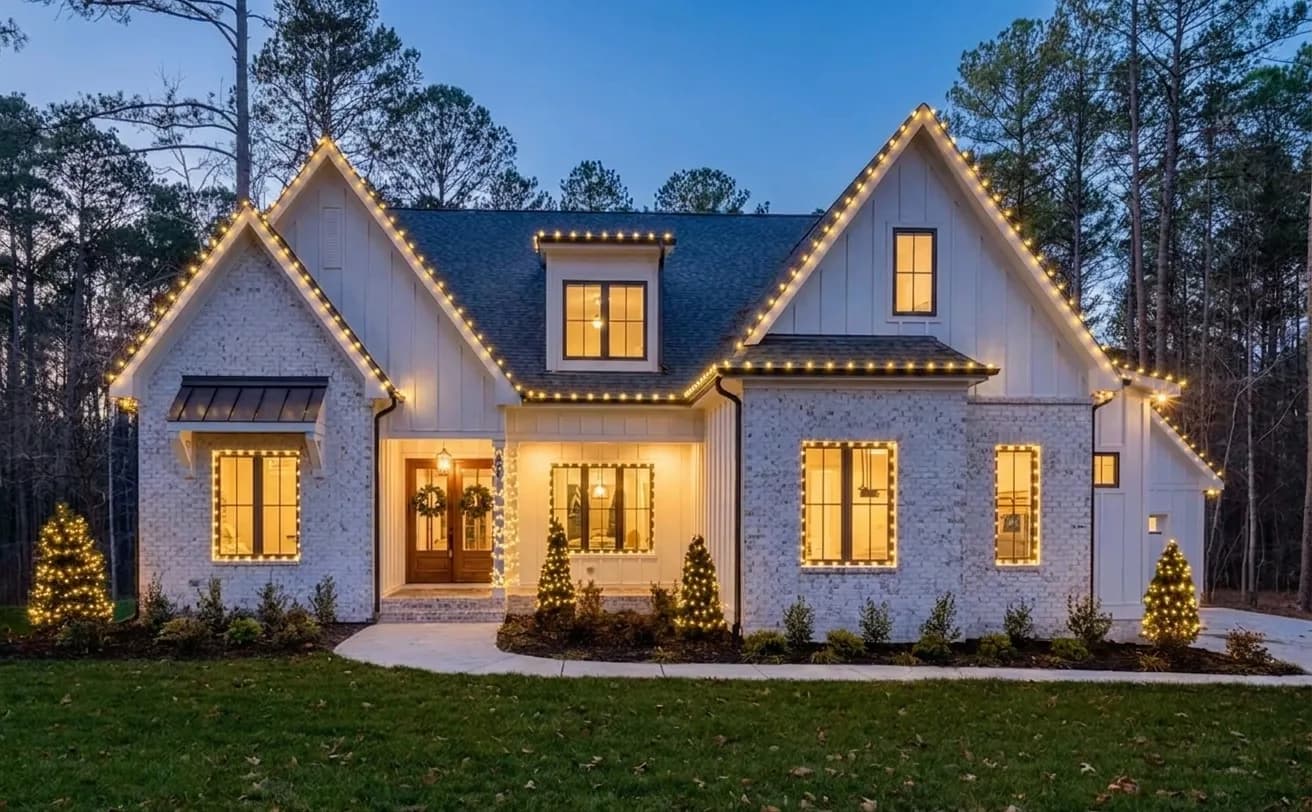
Drag the line to see the change
Same house, same trees, same driveway. Warm white C9 bulbs traced along every roofline. The homeowner does not have to imagine anything. They see it.
TodayOn the postcard
Generated by AI from public street imagery and disclosed as a visualization on the card.
Plan around your campaign economics
A starting 1,000-card campaign costs about $2,000. Whether that works for your business depends on qualified inquiries, close rate and the contribution from each install after direct job costs. Future rebookings can add value, but are not assumed in your first-campaign return.
Campaign scope
Managed campaigns start at 1,000 postcards, from $2 per card (about $2,000). List preparation, AI creative, proofing, printing, postage and per-card QR tracking are included. Optional call tracking, additional enrichment and any other extras are scoped in your quote. Agency and volume pricing are quoted separately.
Proof before mailing
We review imagery availability and prepare the postcard creative. You approve the proof and campaign scope before mailing. Lighting previews are AI concepts, not completed installations.
Useful measurement
Per-card QR tracking is included. Call tracking is optional and must be agreed before mailing. A QR scan is engagement, not a qualified inquiry or a booked job. Campaign summaries use available tracking data and the sales outcomes you report; a campaign phone number alone does not identify the responding household.
Built around route density
Target neighborhoods near your existing jobs to support a denser route. Each installation still has labor, material and travel costs.
Pick the route
We build a list of the best-fit homes around the jobs you already have, so new installs land minutes apart, not across town.
We render every home
Each address gets its own dusk rendering with professional warm white lights. You review and approve every card before anything mails.
Confirm your mailing schedule
We agree on proof approval, production and estimated delivery milestones before you commit. Postal delivery dates remain estimates.
Measure campaign inquiries
Review QR engagement and qualified inquiries. Add optional call tracking before mailing and share booked-job outcomes for a useful campaign summary.
Work backward from your installation calendar
Your local booking season and crew capacity determine the right mailing window. We confirm the available production schedule with you; this page does not promise a fixed arrival date.
Plan
Agree on service area, audience, offer, scope and estimated delivery
Approve
Review usable imagery and postcard proofs before print and mailing
Measure
Review qualified inquiries, booked installs and contribution after the drop
Installer questions, answered
Does direct mail work for Christmas light installers?
Response rates depend on the audience, offer, timing and follow-up. We do not guarantee a response rate or a lift over other mail. Use your own response and close rates to plan, then measure the campaign's actual results.
When should the postcards hit mailboxes?
We confirm the proof, production and estimated delivery schedule for your campaign before you commit. Timing depends on imagery availability, approvals, print capacity and postal delivery. A calendar date on this website is not a delivery commitment.
What does a campaign cost?
Managed campaigns start at 1,000 postcards, from $2 per card (about $2,000). List preparation, AI creative, proofing, printing, postage and per-card QR tracking are included. Optional call tracking, additional enrichment and any other extras are scoped in your quote. Agency and volume pricing are quoted separately.
What does the postcard actually show?
The front is a photorealistic AI rendering of the recipient's own home at dusk with professional warm white lights on the rooflines, generated from publicly available street imagery. The card discloses that the image is an AI visualization. The back carries your offer, your phone number, and a QR code unique to that address.
How do I know if the campaign worked?
Per-card QR tracking is included. Call tracking is optional and must be agreed before mailing. A QR scan is engagement, not a qualified inquiry or a booked job. Campaign summaries use available tracking data and the sales outcomes you report; a campaign phone number alone does not identify the responding household.
Plan your Christmas campaign
Tell us your service area, available installation capacity and preferred mailing window. We will confirm the scope and schedule before you commit.